What reformulation actually looks like for food developers in South Africa and Brazil, from three people who live inside the problem.
A conversation from our monthly webinar series · featuring Andrew Fulton (80Twenty), Chris Botha (Technology Driven Concepts) and Paulo Silveira (Food Tech Hub LATAM)
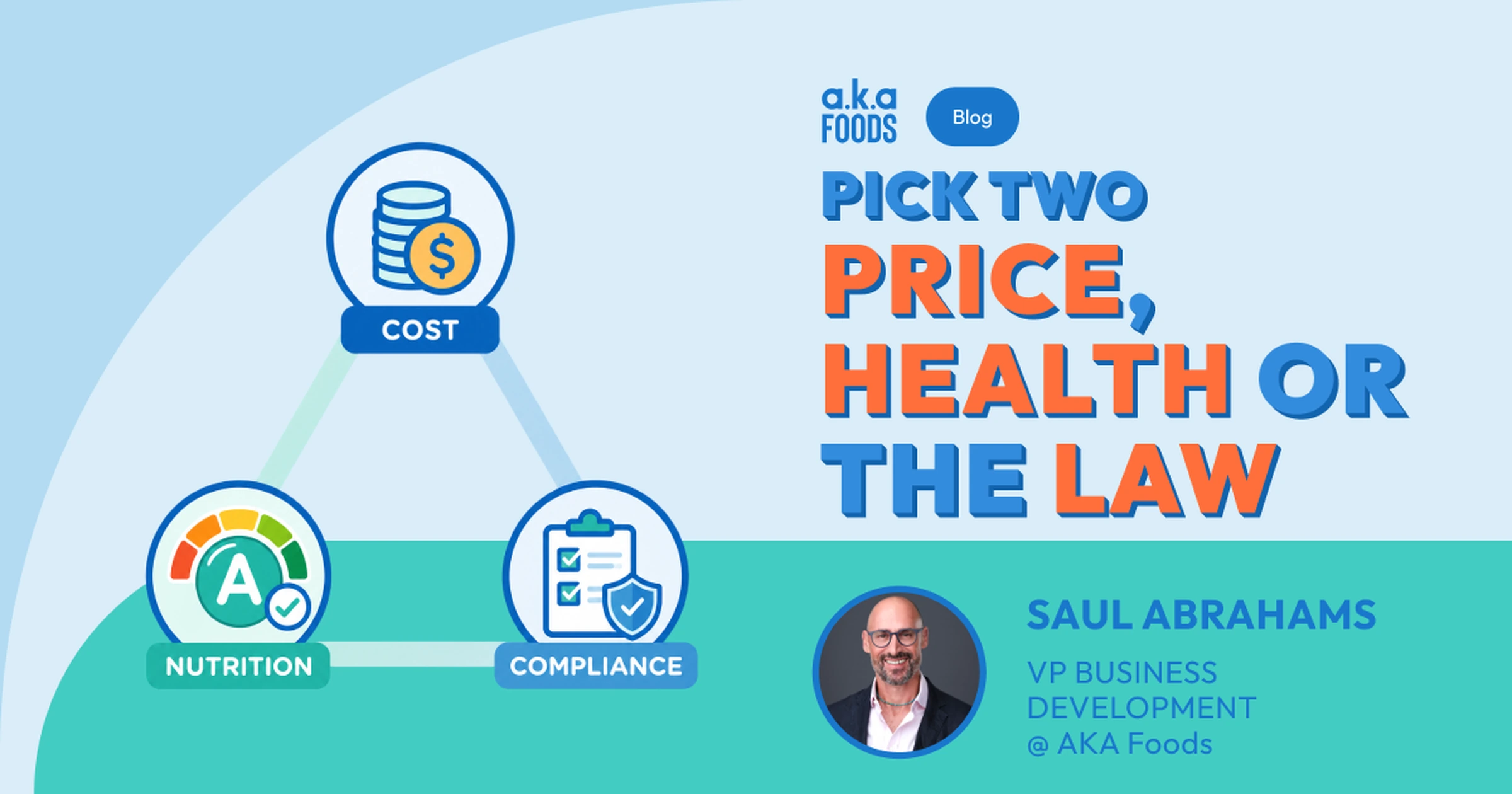
Every food developer works against the same squeeze. Make a product healthier and the cost goes up. Keep it cheap and sweet and you lean on the sugar and salt that regulators are now taxing and labeling. Reformulate to stay on the right side of the law and you spend money while risking the taste people came for.
Healthy, affordable, legal. On most days, you get to pick two.
In South Africa and Brazil, two of the harder markets on earth to formulate for, that trade-off is a daily reality rather than a slide in a strategy deck. We brought three people who work inside it onto one call. Here is what they told us.
Why “just remove the sugar” is the wrong brief
When a sales director asks for sugar to come out of a product, it sounds like a one-line instruction. It isn’t. As Chris Botha, R&D director at Technology Driven Concepts, put it, sugar is quietly doing five or six jobs at once.
Sugar delivers sweetness. It builds body and mouthfeel. It lowers water activity, which protects microbiological shelf life. It helps preserve the product. It balances the sweet-acid ratio that gives a product its rounded flavor, and it supplies viscosity.Chris Botha, Technology Driven Concepts
Pull sugar out and every one of those jobs needs a replacement. Sweetness gets rebuilt with sweeteners and modulators like stevia, then carefully masked so the metallic or liquorice off-notes never reach the consumer. Mouthfeel gets rebuilt with hydrocolloids chosen to mimic a syrupy, full body without turning gummy. Even the look of the product shifts: take out sugar solids and you can lose the opacity and depth that shoppers recognize, so you engineer the cloudiness back in. The consumer is supposed to notice none of it.
The regulatory map has no single playbook
South Africa introduced its Health Promotion Levy in 2018, taxing roughly 2.1 cents for every gram of sugar above 4g per 100g. That 4% cliff sounds clean until you remember that ingredients carry their own sugar. Milk contributes about 4.7% sugar on its own, so a dairy-based drink with 10% milk is already carrying around half a percent before anyone adds a thing. To stay under the threshold, a formulator has to aim for roughly 3.5% added sugar, not 4.
Cross a border and the rules change again. Zimbabwe and Mauritius tax from the very first gram of added sugar, with no dairy exemption. Mauritius is now going after categories like jam, where sugar is central to shelf life and to the taste itself. One formulation cannot serve all of these markets, and the pressure gets sweeter, not milder, the further north you go in Africa, where warmer climates and energy demand push demand toward sweeter products.
Brazil: the shift is coming from the shopper
Where African markets are often driven by regulation, Brazil is increasingly driven by demand. Paulo Silveira, founder of Food Tech Hub LATAM, laid out the scale that makes it possible: around 350 million tons of grain a year, including 180 million tons of soy and 140 million tons of corn, feeding 42,000 food companies. Brazil already has the raw protein base that shoppers are now asking for.
Industry has moved on sugar too. Several years ago Brazilian food companies signed an agreement with the health ministry to cut 140,000 tons of sugar from processed products, and they delivered it. Front-of-pack warning boxes for high sugar, salt and fat now give shoppers a choice at the shelf, and fibre is turning up in biscuits, breads and waffles, some of it from the orange biomass left over from the country’s juice production.
After 40 years in the food industry, I can see there is no way back. It is not a hype. It is a real trend in Brazil.Paulo Silveira, Food Tech Hub LATAM
The stakes nobody puts on a label
Behind the chemistry sits a harder truth about who these products feed. Andrew Fulton of the consumer analytics firm 80Twenty set the scene with the numbers.
For a large part of the population, starch is the foundation of the diet and the calculation is calories per rand, not price per kilogram. Sweetness in that context is fuel for a working day, not indulgence. Strip it out carelessly and you risk removing nutrition and energy from the people who can least spare it. At the same time, a smaller, wealthier group is trading up: milk alternatives grew about 90% in two years, and “cut down on sugar” is the single most common thing South African shoppers say they plan to do.
Where it breaks first: cost
We asked the panel a blunt question. When you cannot hold price, nutrition and taste in balance at once, what gives first? Both practitioners gave the same answer without hesitating: cost. Food companies have been squeezed on the bottom line for years, and sugar is a genuinely cheap ingredient. Everything that replaces it costs more.
Some producers respond by choosing to absorb the sugar tax and protect the eating experience, because losing the taste means losing the customer. Others reformulate hard. The line the panel kept returning to reframes the whole exercise:
It is all about affordable nutrition, not cheaper products. We need to look after health, but whatever we do, we reward people with good quality, affordable nutrition. Safety is non-negotiable.Chris Botha, Technology Driven Concepts
There is a proof point in that ambition. In Malawi, where milk is scarce and expensive, Chris’s team replaced dairy with soy and did the sensory work to make the soy version taste close to the original. They launched the two side by side. Shoppers didn’t pick the difference, and the soy product was both more nutritious and cheaper to make. Affordable and nutritious turned out to be compatible when the formulation work was done properly.
What this means for the developer at the bench
The formulation is one component of a value chain that also includes agriculture, policy, logistics and manufacturing, and cost can be taken out of any of them. What the developer needs is a way to see the whole board at once: which ingredient options are open to them, what each one does to taste and shelf life and price, and how the regulatory picture is shifting across every market they sell into.
That visibility is exactly what we build for at a.k.a Foods. Keeping a food scientist current on ingredient choices and a moving regulatory environment across markets is slow, manual work today, and it is work that compounds badly when the answers live in one person’s head. Give teams the full picture and the trade-offs stop being a guessing game.
You still only get to pick two on a bad day. The job is to make good days more common.